
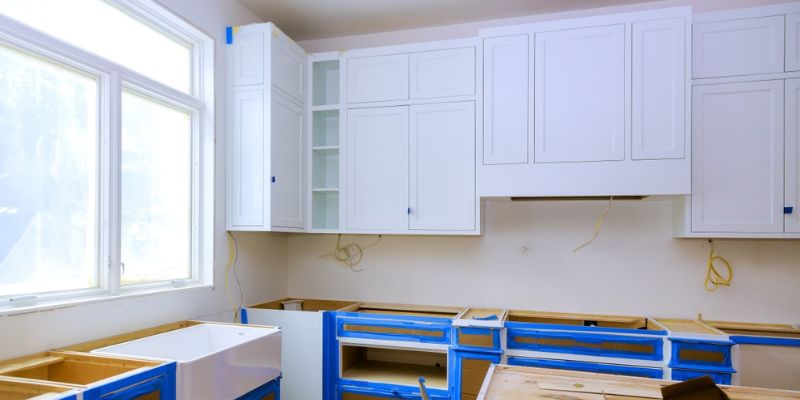
Cabinet painting can create a dramatic transformation while preserving sturdy boxes and a functional layout. Replacement offers greater freedom, but it also brings a larger investment and a more involved renovation. The right choice depends on what is actually wrong with your cabinets—not simply how old they are.
Cabinet Painting vs. Replacement: What Does Each Option Change?

Cabinet Painting Refreshes What You Already Have
Professional cabinet painting keeps the existing boxes, doors, and drawer fronts. Painters remove the doors and hardware, clean away grease, repair minor imperfections, prepare the surfaces, apply a suitable primer, and finish everything with a durable cabinet coating.
This approach changes the color, sheen, and mood of the kitchen. It can brighten dark wood, update builder-grade cabinetry, or introduce a two-tone palette without altering the footprint. New pulls, hinges, or soft-close hardware can complete the transformation.
Cabinet Replacement Creates a New Foundation
Replacement removes the existing cabinet boxes and installs new ones. It allows you to change the layout, add storage, improve accessibility, choose a different door style, or accommodate new appliances.
That flexibility makes replacement valuable when the current kitchen no longer functions well. However, it typically requires a higher budget and causes more disruption than painting.
Should I Paint My Kitchen Cabinets or Replace Them? Ask These Five Questions

1. Are the Cabinet Boxes Structurally Sound?
Open every door and inspect the box corners, shelves, drawer tracks, and areas near the sink or dishwasher. Strong, square boxes with secure joints usually make good candidates for painting.
Consider replacement if you find widespread water swelling, mold, severe warping, broken frames, sagging shelves, or particleboard that crumbles around screws. Paint can renew a stable surface, but it cannot restore structural strength.
2. Does the Current Layout Work?
Painting makes sense when you like the cabinet placement and have enough storage and workspace. It gives the room a new identity without changing how you use it.
Replacement becomes more practical when appliances block walkways, drawers collide, upper cabinets feel inaccessible, or storage falls short. New cabinetry can correct these problems by changing dimensions, configurations, and interior features.
3. Do You Like the Door Style?
A new color can modernize Shaker, flat-panel, raised-panel, and traditional doors. If the design clashes with your vision, replacement or refacing may produce a more satisfying result.
Material also matters. Solid wood, sound MDF, and properly prepared veneer often accept coatings well. Peeling thermofoil, delaminated surfaces, and swollen MDF may require new components.
4. How Much Disruption Can You Handle?
Cabinet painting generally keeps demolition to a minimum. Professionals can remove and finish doors and drawer fronts while protecting the frames and surrounding surfaces.
Replacement involves removal, installation, adjustments, and coordination with other trades when countertops, sinks, or utilities change.
5. What Are Your Long-Term Plans?
If you expect to keep the same layout for years, painting sound cabinets can extend their usefulness and leave room in the budget for lighting, counters, or a backsplash. If you already plan a major renovation, painting now could duplicate part of that future investment.
A Quick Cabinet Painting vs. Replacement Comparison
| Factor | Cabinet Painting | Cabinet Replacement |
|---|---|---|
| Best for | Sound cabinets with an outdated finish | Damaged cabinets or an inefficient layout |
| Cost level | Lower | Higher |
| Design freedom | New color, sheen, and hardware | New layout, materials, doors, and storage |
| Disruption | Limited preparation and refinishing | Demolition and installation |
| Main limitation | Cannot fix layout or structural failure | Requires more planning and budget |
When Cabinet Painting Is Worth It
Choose painting when your cabinets feel visually tired but remain solid and useful. Good candidates may have a faded stain, an unpopular color, small scratches, mild finish wear, or a dark appearance despite a workable layout.
Professional preparation makes the difference. Kitchen cabinets collect oils, food residue, moisture, and frequent hand contact. Applying ordinary wall paint over an inadequately prepared surface can lead to chips, peeling, and poor adhesion. A careful process removes contaminants, creates a bondable surface, and gives the finish time to cure.
When Cabinet Replacement Is the Better Investment
Replacement makes sense when repairs would only delay an unavoidable renovation. Choose it when cabinet boxes have extensive water damage, the layout wastes space, storage falls short, or you want to move appliances and work zones.
It also suits a full kitchen remodel. New cabinets let you add pantry towers, deep drawers, pull-out organizers, accessible shelving, or a different island. Here, the higher price pays for functional improvements that paint cannot deliver.
Before replacing quality cabinets solely because of color, request a professional assessment. An experienced contractor can separate cosmetic wear from genuine structural problems.
Where Does Cabinet Refacing Fit?
Refacing keeps the boxes but replaces doors and drawer fronts, then covers visible frames with a new surface. It can work when the layout and boxes remain useful but the door style does not.
Compare estimates carefully. Refacing adds flexibility, yet its cost can approach replacement depending on the materials and custom components. If you like your doors, painting may offer better value. If the boxes or layout need major changes, replacement may make more sense.
The Final Verdict: Fix the Real Problem
So, should I paint my kitchen cabinets or replace them? Paint when the structure, layout, and door style still serve you well. Replace when damage, poor storage, or an inefficient footprint limits the kitchen. If the answer remains unclear, start with a professional inspection rather than assuming the most expensive option will produce the best result.
The right update balances appearance, daily function, budget, and future plans. Evaluate the cabinets from the inside out, and you can invest where it matters without paying for changes you do not need.
Give Your Lynn Kitchen a Smarter Fresh Start
Cabinet painting and cabinet replacement solve different problems. Painting offers the best value when the cabinet boxes remain strong, the layout works well, and the main goal involves updating the color or finish. Replacement becomes the smarter investment when structural damage, limited storage, or an inefficient layout affects the kitchen’s function. Refacing may provide a middle option when the boxes remain usable but the door style needs to change.
Before deciding, evaluate the cabinets from the inside out and consider your budget, design preferences, tolerance for disruption, and long-term renovation plans. By focusing on the condition and functionality of the existing cabinetry, Lynn homeowners can choose an improvement that refreshes the kitchen without paying for unnecessary changes.